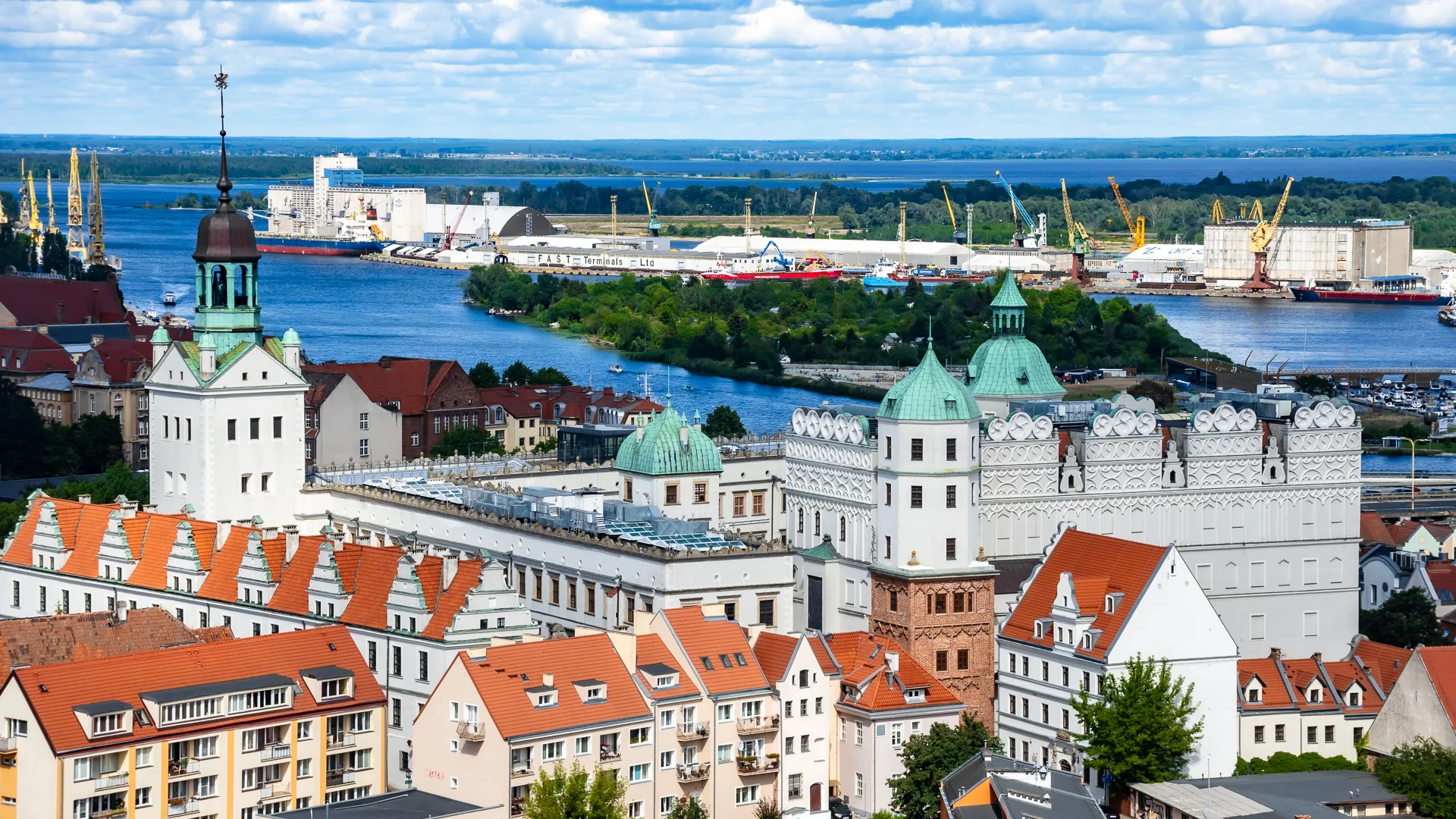
Five Captivating Historical Milestones at the Ducal Castle in Szczecin
Szczecin is a city in western Poland that has played a significant role in Central Europe for centuries. However, it is now somewhat overlooked and lacks the same level of influence it once held. One notable feature of this city, which serves as a reminder of its glorious history, is the Ducal Castle.
The Ducal Castle was originally constructed in the 14th century and served as the residence for the dukes of Pomerania. Throughout the centuries, it has undergone numerous architectural transformations, showcasing Gothic, Renaissance, and Baroque styles.
Here are five intriguing milestones from the rich history of this magnificent castle.
Advertising
1. Swedish Pomerania
The Swedish presence in the Ducal Castle dates back to the 17th century when Sweden exerted its influence over the region during the height of its power. In 1648, as a result of the Peace of Westphalia, Western Pomerania, including Szczecin (then known as Stettin), came under Swedish control.
Under Swedish rule, the Ducal Castle became an important stronghold for the Swedish monarchy in the region. It served as a residence for Swedish kings and dukes, a testament to their authority and aspirations to cement their dominion over the lands.
The castle underwent significant renovations and expansions during this period. Swedish architects and craftsmen left their mark on the castle's architecture, incorporating elements of the prevalent Swedish style of the time. The Swedish influence can be seen in various parts of the castle, including its interior design, ornate details, and structural modifications.
The Ducal Castle also played host to significant events and ceremonies during the Swedish era. Royal processions, banquets, and celebrations took place within its walls, cementing the castle's role as a center of power and prestige.
However, the Swedish control over the Ducal Castle was not without challenges. During the Scanian War in the late 17th century, the castle endured the aforementioned siege by Swedish forces, which sought to retain control over the strategically important region. Despite the intense fighting and damage inflicted, the castle's fortifications held strong, demonstrating its resilience and the determination of its defenders.
In the 18th century, the Swedish era in the Ducal Castle came to an end. As a result of shifting political dynamics and conflicts in the region, Western Pomerania, including Szczecin, passed into the hands of the Prussian Kingdom in 1720.
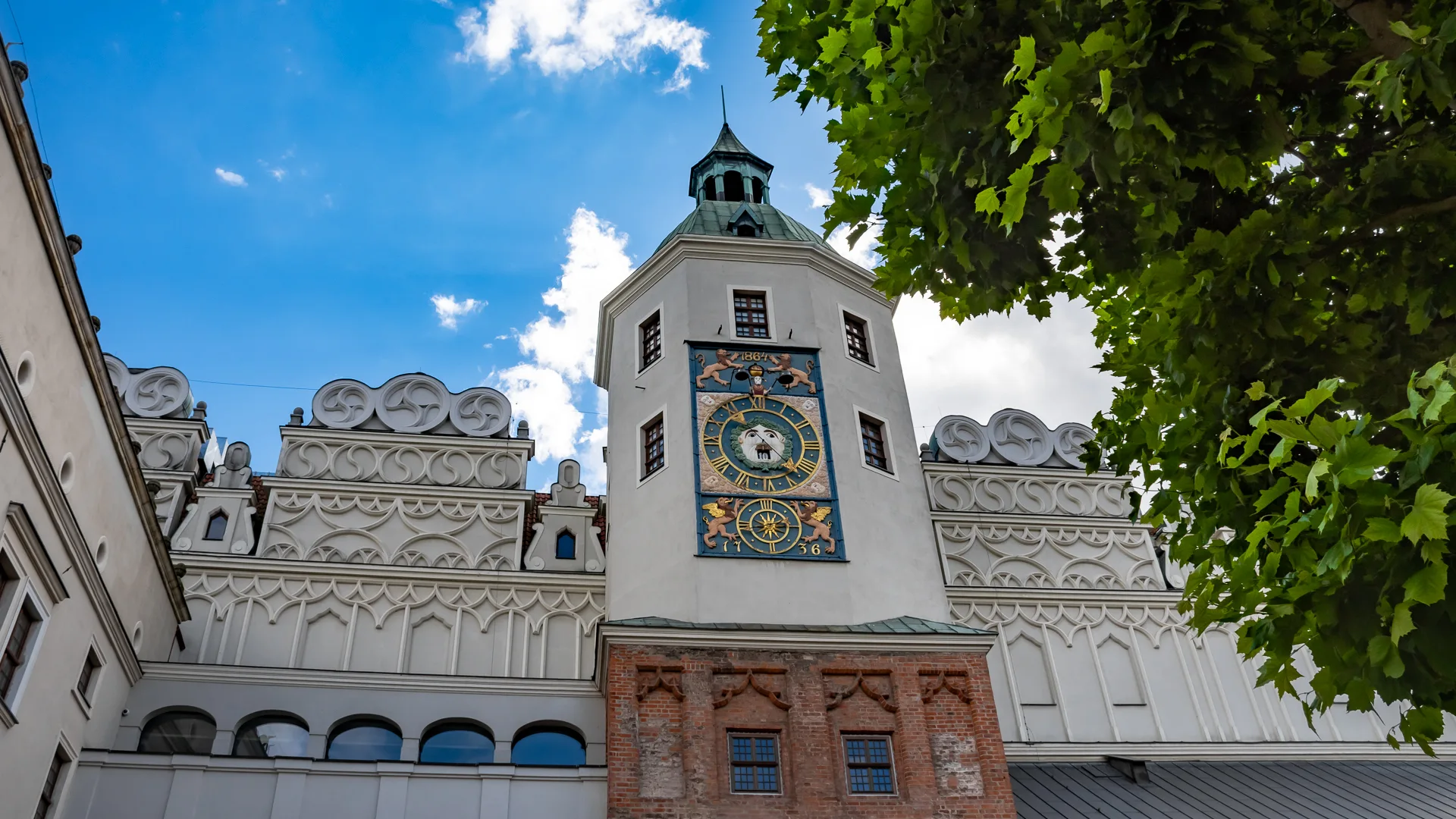
The Wedding of Louise of Mecklenburg-Strelitz
On September 24, 1766, the Ducal Castle was the venue for the wedding of Louise of Mecklenburg-Strelitz, a princess from the neighboring Duchy of Mecklenburg-Strelitz, to King Frederick William II of Prussia. This marriage eventually led to Louise becoming the Queen Consort of Prussia and later the Queen Consort of Germany after the establishment of the German Empire.
Louise's lineage traced back to the noble House of Mecklenburg-Strelitz, a ruling family in the adjacent Duchy of Mecklenburg-Strelitz. This alliance was a strategic match, aimed at fostering stronger political ties and consolidating power between the Mecklenburg-Strelitz dynasty and the Prussian monarchy. The wedding ceremony at the Ducal Castle symbolized the formal union between these influential houses, solidifying their alliance through matrimony.
Following her marriage to Frederick William II, Louise assumed the title and responsibilities of Queen Consort of Prussia. Her role as queen brought her prominence and influence within the Prussian court, where she endeavored to fulfill her duties with a sense of decorum and devotion. As a figurehead of the royal household, Louise engaged in philanthropic endeavors, supporting charitable causes and championing the welfare of her subjects.
The significance of Louise's marriage extended beyond her role as Queen Consort of Prussia. With the subsequent formation of the German Empire in 1871, Louise's position elevated to that of Queen Consort of Germany, representing a unifying force within the newly unified nation. Her presence and influence contributed to the establishment and stabilization of the monarchy within the framework of the German Empire.
The Ducal Castle's selection as the venue for Louise and Frederick William II's wedding ceremony further underscored the castle's historical importance and grandeur. The castle's opulent halls and picturesque surroundings provided a fitting backdrop for this regal union, showcasing the splendor and prestige associated with the occasion.
Advertising
Redesign by Georg Wenzeslaus von Knobelsdorff
In the mid-18th century, a remarkable transformation took place within the walls of the Ducal Castle in Szczecin, thanks to the visionary expertise of the renowned Prussian architect, Georg Wenzeslaus von Knobelsdorff. Tasked with redesigning the castle, Knobelsdorff embarked on a journey that would elevate the structure into an exquisite exemplar of Rococo architecture, leaving an indelible mark on its grandeur and imbuing it with an air of opulence and refinement.
Knobelsdorff, celebrated for his mastery of architectural aesthetics, embarked on an ambitious endeavor to rejuvenate the Ducal Castle. Drawing inspiration from the Rococo movement, which emphasized elaborate ornamentation, delicate forms, and playful motifs, he envisioned a harmonious fusion of beauty and functionality that would elevate the castle to new heights.
Under Knobelsdorff's skillful guidance, the castle's exterior underwent a metamorphosis. Elaborate facades were meticulously crafted, showcasing intricate detailing and graceful curves that captured the essence of the Rococo style. Delicate sculptures, ornate balustrades, and intricate stonework adorned the castle's exterior, exuding an enchanting charm that invited admiration from all who beheld it.
The interior of the Ducal Castle experienced a similar transformation. Knobelsdorff's discerning eye for design and spatial arrangement brought forth a symphony of elegance within its chambers. Lavish stucco decorations adorned the ceilings, walls, and corridors, reflecting the light and casting a mesmerizing glow throughout the castle. Elaborate frescoes, gilded accents, and sumptuous furnishings further enhanced the regal ambiance, creating an environment that epitomized luxury and refinement.
Knobelsdorff's redesign not only focused on aesthetics but also aimed to improve the functionality and livability of the castle. He reimagined the castle's layout, optimizing the flow between rooms, and introducing modern conveniences of the time. With careful consideration for both form and function, Knobelsdorff ensured that the Ducal Castle not only became a visual masterpiece but also a comfortable and functional residence fit for royalty.
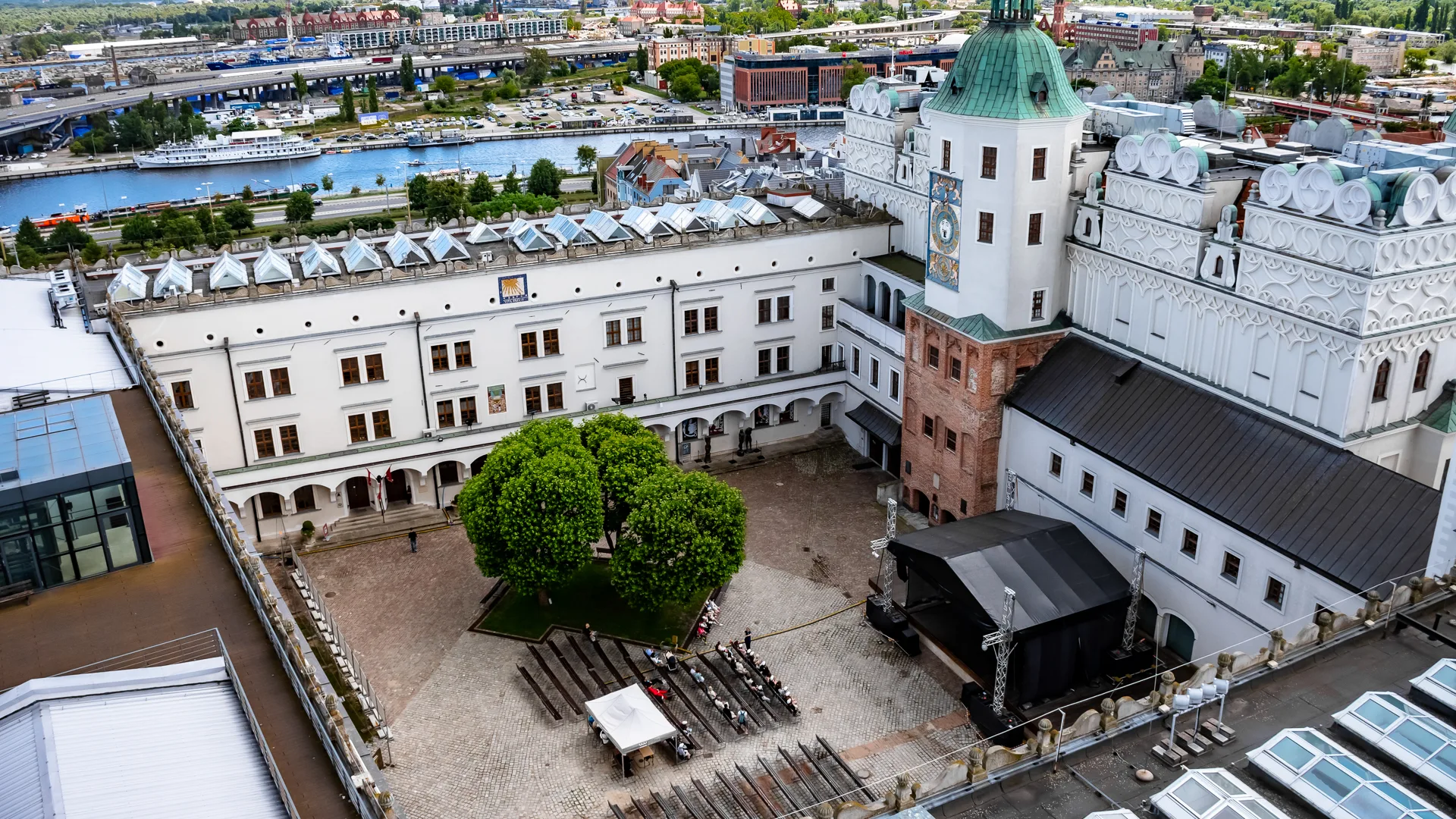
The Courtyard of Szczecin's Ducal Castle
Transformation into a Military Institution
In the 19th century, during the Prussian era, the Ducal Castle underwent a significant transformation, taking on a new role as a military institution. The castle's strategic location and robust architecture made it an ideal choice for repurposing into a military facility. Consequently, it served as a barracks, providing accommodations for soldiers, and later became an officers' school, training and nurturing the future leaders of the Prussian military.
This transition necessitated modifications to the castle's structure to meet the specific requirements of a military institution. As part of the adaptations, military-style elements were added to the castle's design, reflecting its new purpose. The austere yet functional aesthetic of the military architecture blended with the existing grandeur of the castle, creating a unique amalgamation of styles.
Additionally, new buildings were constructed within the castle complex to accommodate the needs of the military institution. These structures included training facilities, administrative offices, and quarters for officers and cadets. The expansion of the castle's infrastructure further reinforced its status as a vital hub for military operations and education.
Throughout this period, the Ducal Castle's transformation into a military institution played a crucial role in shaping the military prowess and culture of the region. It served as a center of military discipline, education, and training, fostering a sense of camaraderie and instilling the values of duty and honor in generations of Prussian officers. The castle's adaptation to its military functions exemplified the ability to repurpose historical structures to meet evolving societal needs, while preserving the rich heritage that lay within its walls.
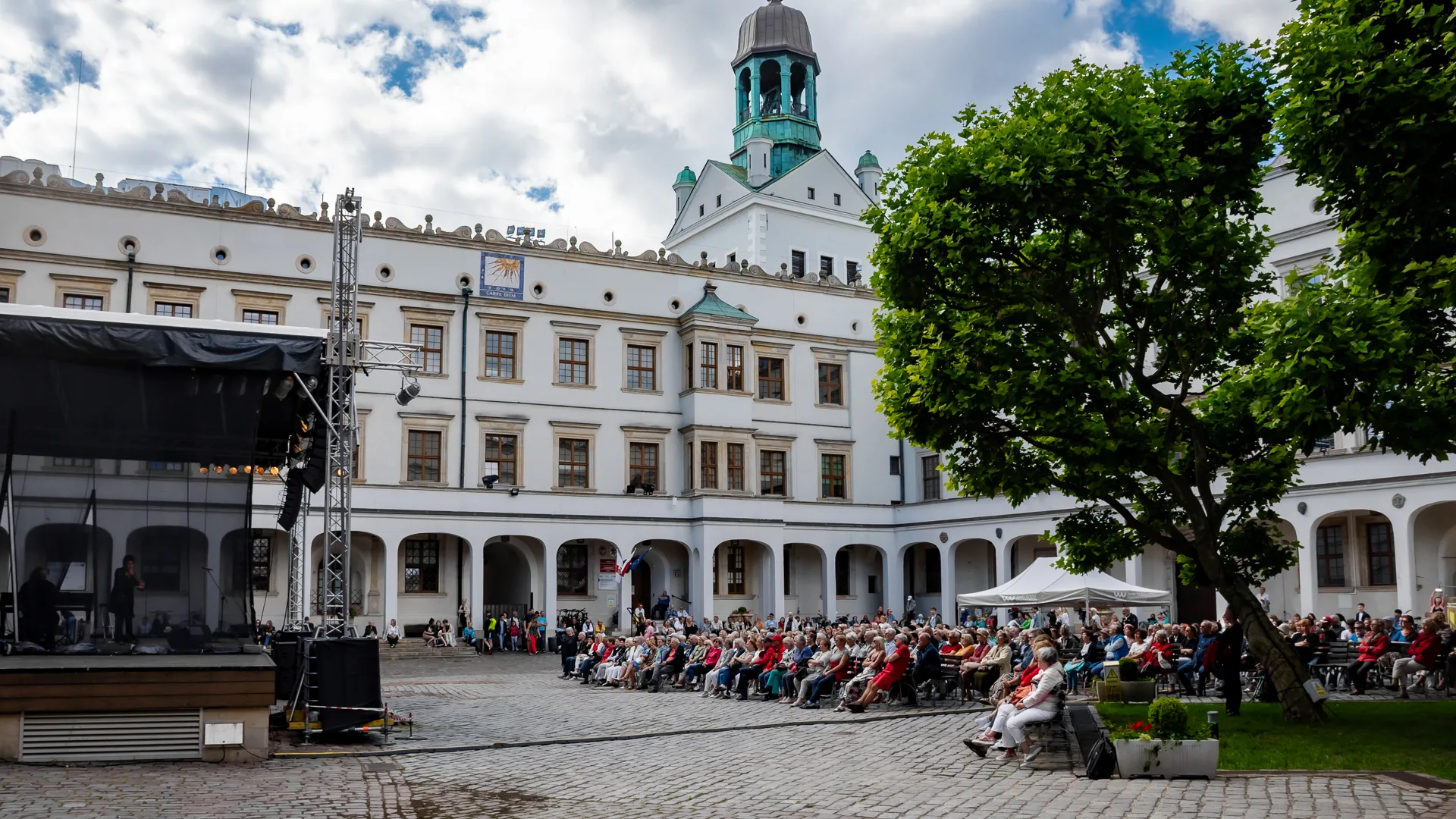
Post-WWII Restoration
Following the tumultuous period of World War II, the Ducal Castle in Szczecin stood as a somber testament to the destruction wrought upon the city. However, a determined effort to revive the castle and restore its former splendor commenced in the 1950s. The post-war restoration project was undertaken with great care and attention to detail, as skilled craftsmen and experts embarked on a journey to bring the castle back to life.
The restoration process involved extensive research and documentation to ensure historical accuracy. Architects, historians, and artisans meticulously studied surviving fragments, historical records, and architectural plans to recreate the castle's original features. Every effort was made to preserve the castle's authenticity and recreate the architectural details that had been lost or damaged during the war.
Skilled craftsmen employed traditional techniques and materials to reconstruct the castle's intricate stonework, ornamental elements, and decorative features. With unwavering dedication, they meticulously pieced together the fragments of the castle's past, striving to recreate the ambiance and grandeur that had once defined the structure.
The successful restoration of the Ducal Castle not only brought back its architectural magnificence but also allowed it to resume its pivotal role as a cultural and historical landmark in Szczecin. The castle stands today as a testament to the resilience and determination of the city and its inhabitants to preserve and honor their rich heritage. Visitors can now explore the castle's meticulously restored rooms, immerse themselves in its history, and appreciate the artistry and craftsmanship that have gone into its revival, ensuring that its significance endures for generations to come.

Read More From WorldThroughMyCamera.com