
How Bad Is The Homeless Situation In Portland?
It is bad. It is really bad.
Portland, Oregon, once known for its charm, creativity, and progressive atmosphere, has become a city with a stark contrast between perception and reality. For years, it has been celebrated as one of the best cities to visit in the United States. Travelers often highlight its friendly people, green initiatives, and rich cultural scene. The city has a reputation for being unique, walkable, and surrounded by beautiful natural landscapes that make it a dream destination for many.
Advertising
When you read about Portland online, it is easy to form an image of a city that perfectly blends urban life with nature. Articles and travel guides often mention the city’s walkable downtown, lined with independent coffee shops, small boutiques, art galleries, and vibrant street life. It seems like the kind of place where one could spend hours exploring, discovering local gems at every corner. However, what these glowing descriptions rarely capture is how drastically the reality of walking those same streets has changed.
The thing is that while the streets are indeed walkable, they are not pleasant to walk. The infrastructure is there, the sidewalks are wide, and the buildings are full of character, but the experience itself has become uncomfortable. It is not just about seeing a few unhoused individuals, which is a reality in many large cities. The situation in Portland is far more severe and visible, and it affects the atmosphere of the entire downtown area.
Of course, a city like Portland is probably not recommended primarily for its city features. Its strongest appeal has always been its surroundings. The state of Oregon is known for its breathtaking natural beauty, from the Columbia River Gorge to Mount Hood, and countless hiking trails and waterfalls. Visitors often come to the region for nature rather than urban life. Still, the common recommendation found online is that the city itself is worth exploring too, that it has a charm and character of its own.

Typical street scene in Portland, OR
And that is true to an extent. The city could indeed be very nice. There is huge potential for Portland to be one of the most pleasant mid-sized cities in the country. The downtown area is compact and easily walkable, with historic buildings and an interesting urban layout. There are signs of life and the seeds of something great, but unfortunately, all of that potential is overshadowed by the visible homelessness crisis that has taken over many streets.
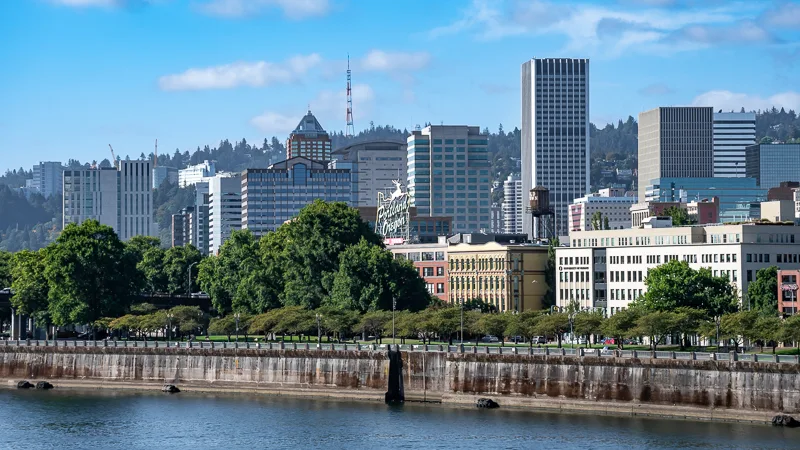
It is deeply disheartening because from a distance, Portland looks fantastic. It looks great on Google Street View, in photos, and in travel videos. The city seems clean, creative, and vibrant. But the feeling in reality was all but nice. When I visited, I quickly realized that the experience of being there was very different from what the internet had led me to believe.
The first time I went to downtown Portland was during a Saturday. Sadly, American downtowns tend to be quiet on weekends, as most people do not live in the city center. It is common to find streets empty or businesses closed. Because of that, it would not be fair to judge the entire downtown solely based on a weekend visit. However, I also went back on a Monday, expecting a livelier scene, and it was only slightly better.
Advertising
When I walked through downtown on that Saturday, it was pretty much only homeless people out on the streets. There were tents set up on sidewalks, belongings piled up along building walls, and the air of discomfort that comes from knowing that people are struggling to survive right in front of you. During the weekday, there were more workers and a bit more movement, but the problem was still very visible. It did not have the energy or liveliness that one would expect from a city that is often described as “vibrant.” Compared to European cities, where public squares and downtown areas are usually bustling with people at all hours, downtown Portland felt hollow and uneasy.
It reached a point where it felt best to avoid many streets altogether. Entire blocks in downtown Portland have turned into makeshift campsites, with tents and improvised shelters stretching for long sections of the street. It is not just one or two areas either, it is widespread. There is an atmosphere of neglect that is impossible to ignore.

Pioneer Courthouse Square
We decided to stop for lunch near Powell’s City of Books, one of Portland’s most famous landmarks. At first, it seemed like a nice area, filled with bookstores, cafes, and a steady stream of people passing by. But even there, the signs of the city’s problems were evident. The restroom at the place we ate was constantly occupied by addicts coming and going. The staff seemed used to it, handling it with quiet resignation, which was both telling and saddening.
There are exceptions though. Pioneer Courthouse Square stands out as a bright spot in downtown. It feels cleaner, more organized, and safer. The people who spend time there seem happier, and the atmosphere is welcoming. That single city block has a completely different vibe than the rest of downtown Portland. It is very sad, because the entire city could have that same inviting and comfortable energy if it were better maintained and more secure.
The homelessness crisis in Portland is not a recent development, but it has reached levels that have changed how both visitors and residents experience the city. It is a complex issue, tied to economic inequality, housing costs, mental health struggles, and addiction. But for a visitor, it is impossible not to notice how it impacts the feel of the city. It is no longer just a detail in the background, it is now a defining feature of the urban landscape.
As of now, it is best to avoid downtown Portland. Or at least, to visit briefly, see the main landmarks, and then move on. That is what I did. I took a short walk through the key sights, saw what I wanted to see, and then left. It is unfortunate, because the city center should be the heart of any urban area. Instead, Portland’s downtown feels like a place people have given up on.

Mt. Hood visible in the distance
The good news is that Portland’s most beautiful attractions are not downtown. Many of the city’s highlights are outside the urban core, in the surrounding natural landscapes. From the serene beauty of the Japanese Garden and Washington Park to the incredible views of Multnomah Falls and the Columbia River Gorge, the best of Portland lies in its connection to nature. These places still reflect the Oregon that travelers dream of, and they are where the city truly shines.
Still, it is hard not to feel a sense of disappointment when you realize how much potential is being wasted. Portland could be a city that balances urban energy with natural beauty, a place where downtown life complements the outdoors. Instead, the homelessness crisis has created an urban environment that feels unsafe, uninviting, and deeply troubled.
Portland remains a destination worth visiting, but with clear expectations. Visit downtown briefly, see a few landmarks like Powell’s City of Books or Pioneer Courthouse Square, but be prepared for what you will find. The homeless situation in Portland is not something that can be ignored. It defines the city’s current reality, and until it is addressed, it will continue to shape the experience of everyone who visits.
Read More From WorldThroughMyCamera.com