
Is Rio de Janeiro Really That Dangerous?
No, it is not! Before I traveled to Rio, I read a lot online about how dangerous it is and how tourists were robbed left and right all the time. It made me question my decision to book a trip to Brazil. If you've found this page by searching for safety in Rio, I suspect you share the same concerns.
When it comes to travel safety, it depends on the areas you visit and the fact that you can never be completely safe. You could get robbed in your hometown. As a tourist, you'll likely spend most of your time in the South Zone, including a day of sightseeing in Centro. The South Zone is home to famous beaches such as Copacabana, Ipanema, and Botafogo. It's generally safe during the day, and there's no reason for you to venture into the North Zone if you're just visiting.
The North Zone is a different story. I only went there once, to watch a game at Maracanã Stadium, so I can't speak much about its safety. Keep in mind that most safety concerns about Rio pertain to the North Zone, which you won't be visiting.
Advertising

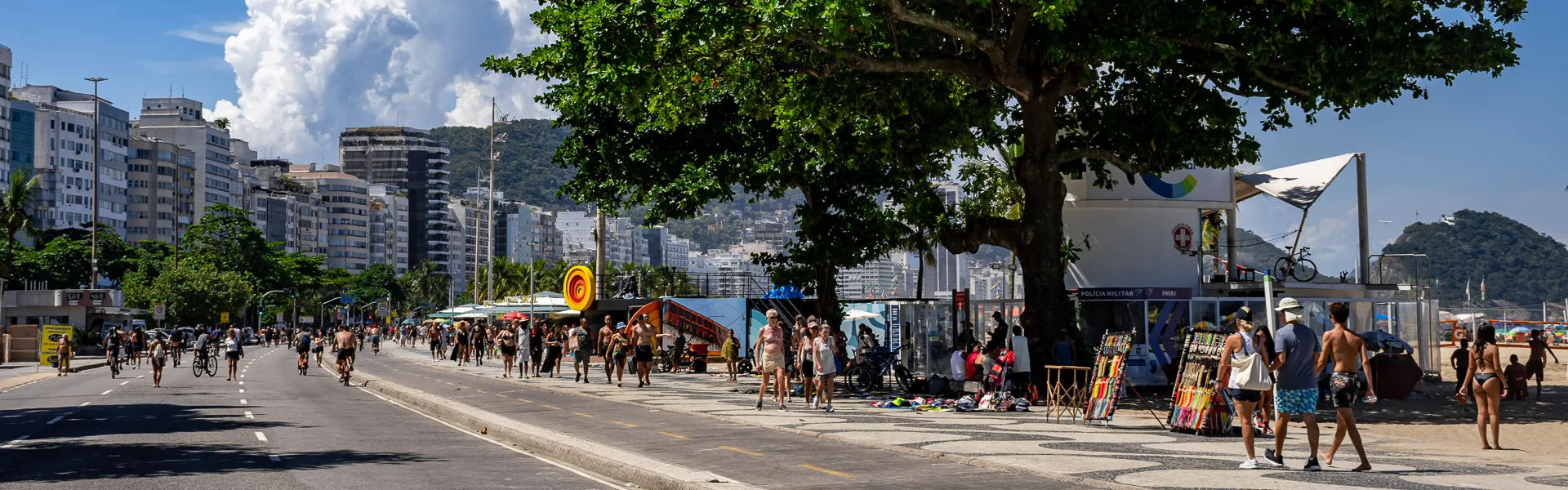
Copacabana Beach
It didn't take long for me to realize that the advice you read online about not using your phone, or even not bringing your phone at all, was completely exaggerated. I felt that most travel advice regarding safety in Rio was incorrect.
My best advice would be to observe how locals act. In the areas you'll visit as a normal tourist, you'll find that just about everyone is using their phones all the time and anywhere.
This is a general rule that works in most situations. If the locals are comfortable enough to use their valuables in public, then there's no reason for you to be excessively vigilant. Of course, you should always be aware of your surroundings, but being too scared will only attract unwanted attention.
I walked with my camera in the same way I've done in Europe and North America before. It never created any problems for me, and I didn't feel like a target by carrying my DSLR around my neck. However, a DSLR is not as common and valuable today as it was ten years ago, so I guess anyone carrying their phone or jewelry would be a bigger target if it were an issue.

A man using his phone in the middle of traffic, while you are told to not even bring your phone when you leave your hotel.
I never felt unsafe or like I had to look over my shoulder in Rio. It didn't feel any less safe than most American cities. How safe something feels and how safe it actually is can, of course, be very different. But when you consider that this is a living city, it puts things into a different perspective. Rio de Janeiro is one of the largest cities in the world, and there's a refreshing amount of activity everywhere during the day. There will be bad areas, but as a tourist, you will likely not see those areas.
The Metro in Rio is completely safe, and it is clean. There's a visible presence of guards, and everything is under video surveillance. The Metro in Rio is probably much safer than similar systems in Europe and North America. So don't hesitate to take the metro from Copacabana/Ipanema into Centro for a day of historic sightseeing. For trips within the Botafogo, Copacabana, and Ipanema area, I would suggest Uber for convenience and the relatively low price.
In Centro, you might have to exercise slightly more caution. But generally, I felt that Centro was quite safe too. It was definitely better than I thought it would be, after having visited Centro in São Paulo a few days earlier. It is important to remember, though, that very few people live in Centro, so on evenings and weekends, the area changes character completely and should probably be avoided as a tourist. But on a business weekday, there is no reason to be more vigilant than in your average American Central Business District.
Advertising

Rochina - Arguably the most famous favela in Rio de Janeiro.
Regarding the favelas that the city is so famous for, it is true that you should not go there alone. The ones near the beaches in the South Zone are not as dangerous as they once were. They have been "pacified" in the last 10-15 years in targeted government campaigns. There's still no reason for you to go there, unless you go with a local guide to learn about the social structures within the favelas and why they are like that.
Something that is often mentioned is that you must be careful not to get lost and inadvertently wander into a favela. Sure, it's not impossible, but if you're on a relaxing vacation without much adventurous exploring, it won't happen to you. If you hang out by Copacabana Beach, you will not wander into a favela by mistake.
Everything written in this article is about how I perceived it during the day. At night it can be different. Avoid the beaches at night. But the beach promenade in Copacabana, for example, is packed with people even after dark. Copacabana felt more gritty after dark, but I still didn't feel more unsafe than in many European cities. Safety is always more of a concern during the darker hours of the day.
Advertising
I believe it's important to share the other side of safety concerns related to Rio de Janeiro, particularly for the average tourist on a beach vacation. While safety issues do exist, the average tourist is unlikely to see or experience them. I don't intend to downplay the problems that exist in the city, but it's unfortunate that many people choose not to visit Rio due to safety concerns. Despite these issues, you don't have to constantly watch your back while in Rio; using common street smarts is sufficient to stay safe, just like in New York City or London.
...And don't leave your phone or camera at home! If you've read one of those guides that suggest that, you can just ignore the whole guide as it is a garbage suggestion.
Read More From WorldThroughMyCamera.com