
Kiel or Lübeck?
Northern Germany is often overlooked in favor of more populous and famous regions such as Bavaria or Berlin, but it offers a distinct charm that draws visitors year after year. Among Germany’s sixteen federal states, Schleswig-Holstein stands out for its low population density and idyllic landscapes.
It is one of the least populated and least densely populated regions in the country, yet it remains a highly popular destination, particularly during the summer months when the coastal climate and maritime atmosphere attract tourists from all over Europe. It is especially popular among Scandinavian travelers to visit Northern Germany, which is perhaps unsurprising given the geographic closeness.
Advertising
The demand for accommodation during peak season can be unexpectedly high. I remember traveling through Schleswig-Holstein in 2021 and struggling to find a hotel room anywhere in the state. I had intended to spend a day or two there before heading home from a trip to Dresden.
Despite searching in all the major towns, I could not find any available rooms and eventually had to cut my trip short and return home earlier than planned. The pandemic was likely one of the contributing factors, but even outside of that, it is always difficult to find good hotels during the summer months. It was not easy, and especially not cheap, to find a room in Kiel last year either.
For those considering a trip to Schleswig-Holstein, the two main urban centers to consider are Kiel and Lübeck. They are not only the largest cities in the state but also the most visited. Flensburg, located near the Danish border, is another city with growing popularity among tourists, although I have not personally been there and therefore cannot comment in depth on what it offers.
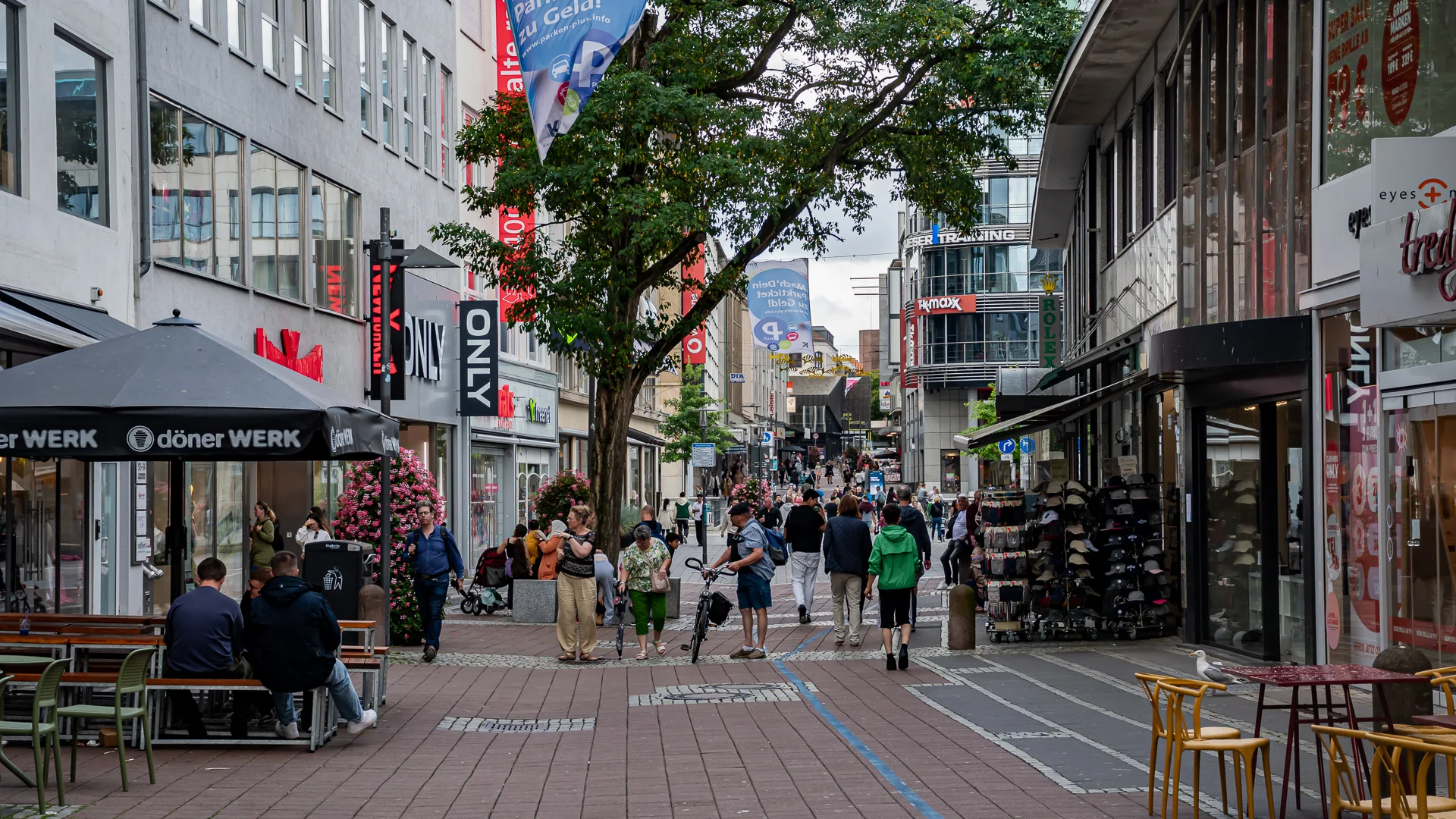
Holstenstraße in Kiel
Lübeck is a city that captures the imagination of history enthusiasts and casual travelers alike. Founded in 1143, Lübeck quickly rose to prominence during the Middle Ages as the leading city of the Hanseatic League, a powerful confederation of merchant guilds and market towns that dominated trade across the Baltic and North Seas. Its location near the Trave River and close proximity to the Baltic Sea allowed Lübeck to become a hub for maritime commerce, earning it the nickname "Queen of the Hanseatic League."
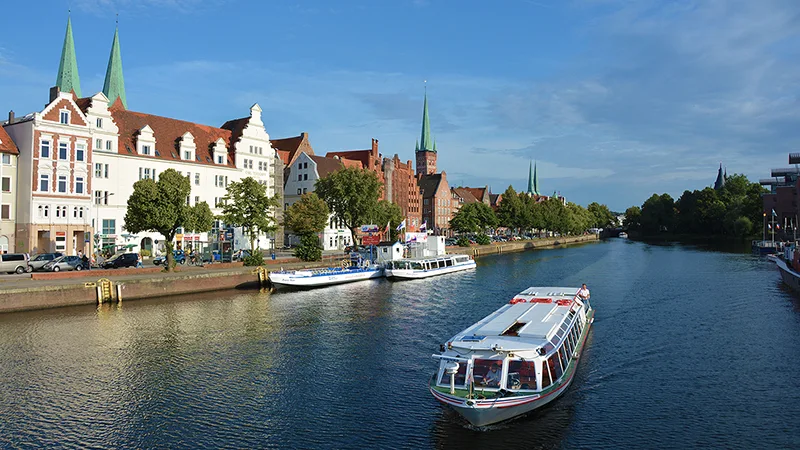
The historical wealth of Lübeck is still visible today, particularly in its exceptionally well-preserved Old Town, which has been listed as a UNESCO World Heritage Site since 1987. What sets Lübeck’s Old Town apart is not only its preservation but also its layout, situated on an island surrounded by the Trave River.
Walking through its cobbled streets, one encounters towering brick Gothic churches, medieval courtyards, merchant houses, and of course, the iconic Holstentor. The Holstentor, a grand city gate dating back to the 15th century, is arguably the most famous of all city gates in Germany. Its twin round towers and arched passageway have become a symbol of Lübeck and a staple of German architectural heritage.
Despite Lübeck’s deep historical roots, some may find that the city’s Hanseatic past is not as overtly celebrated as one might expect. While history is ever-present in the city's architecture and museums, there could be more efforts made to bring its Hanseatic identity to life in everyday culture and tourism. Nevertheless, for anyone interested in medieval history, trade routes, or simply enjoying the charm of an old European town, Lübeck offers a rewarding experience.
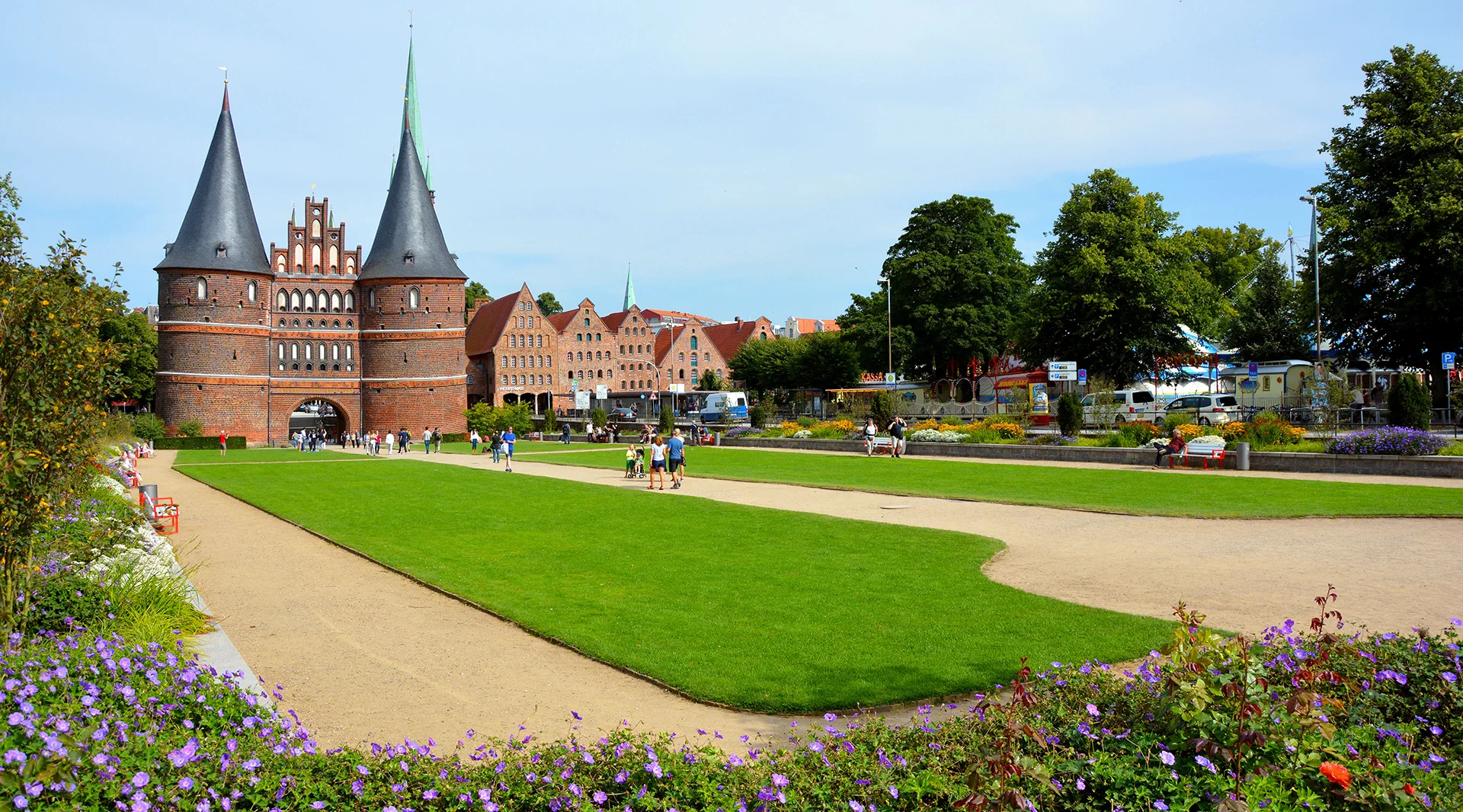
Holstentor in Lübeck
Kiel presents a striking contrast to Lübeck. It is a modern, working city shaped not by medieval trade but by naval history and maritime engineering. Located on the Kiel Fjord, which connects directly to the Baltic Sea, Kiel has long served as a vital naval base. In the 19th and early 20th centuries, it became the principal port of the Imperial German Navy and played a central role during both World Wars.
Much of Kiel was heavily bombed during the Second World War, resulting in the loss of nearly all its historical architecture. The Old Town of Kiel, once full of historic buildings and churches, now exists only in fragments. What little remains is modest in scale, barely a quarter in size compared to other German cities with historical centers. Unfortunately, the city was never rebuilt in the traditional style, and as a result, Kiel lacks the historical charm that characterizes places like Lübeck.
However, Kiel has forged a new identity. It is a city defined by the sea and its naval legacy. The Kiel Maritime Museum is a highlight and a must-visit for anyone interested in the history of German naval operations and maritime culture. The museum offers fascinating exhibits, and while I found it quite warm inside during my visit, it was still a worthwhile stop.
In addition to its maritime attractions, Kiel excels in modern amenities. The city is home to one of the longest shopping streets in Germany, the Holstenstraße, which culminates in a large and bustling shopping mall. For visitors interested in shopping, urban life, and modern German culture, Kiel may offer a more dynamic experience than Lübeck.
Advertising
I have visited Lübeck on numerous occasions and had my first visit to Kiel in 2024. This naturally raises the question for prospective visitors, especially those with limited time, of which city to choose for a short visit.
From my experience, Lübeck stands out as the more interesting of the two, particularly from a tourist’s perspective. Lübeck boasts a well-preserved Old Town, which is often a highlight for those interested in history and architecture. Situated on an island, the Old Town features several historic church towers and offers a distinctly charming atmosphere. I would rank it among the best historic city centers I have visited in Germany, having explored more than ten cities across the country.
Kiel, in contrast, has a much smaller Old Town. Much of the historical city was destroyed during the Second World War and was never rebuilt in its former style. Today, Kiel offers a more modern urban experience. Its primary strength lies in its larger size and more extensive shopping opportunities. The Holstenstraße, one of the longest shopping streets in Germany, is a prominent feature of the city, ending in a large shopping mall that attracts both residents and tourists.
Lübeck is also home to one of Germany’s most iconic landmarks, the Holstentor. City gates are common sights in many German towns, but the Holstentor is arguably the most famous of them all. Lübeck’s status as the former capital of the Hanseatic League adds further historical depth.
In contrast, Kiel's identity is closely tied to the sea, with a strong naval tradition. The city’s maritime character is evident throughout, and a visit to the Kiel Maritime Museum is highly recommended.
Ultimately, both Kiel and Lübeck offer worthwhile experiences and each has its own unique appeal. However, if I were to recommend just one city to someone planning a visit to Schleswig-Holstein, I would choose Lübeck. For tourists seeking a blend of history, architecture, and charm, Lübeck is the more rewarding destination.
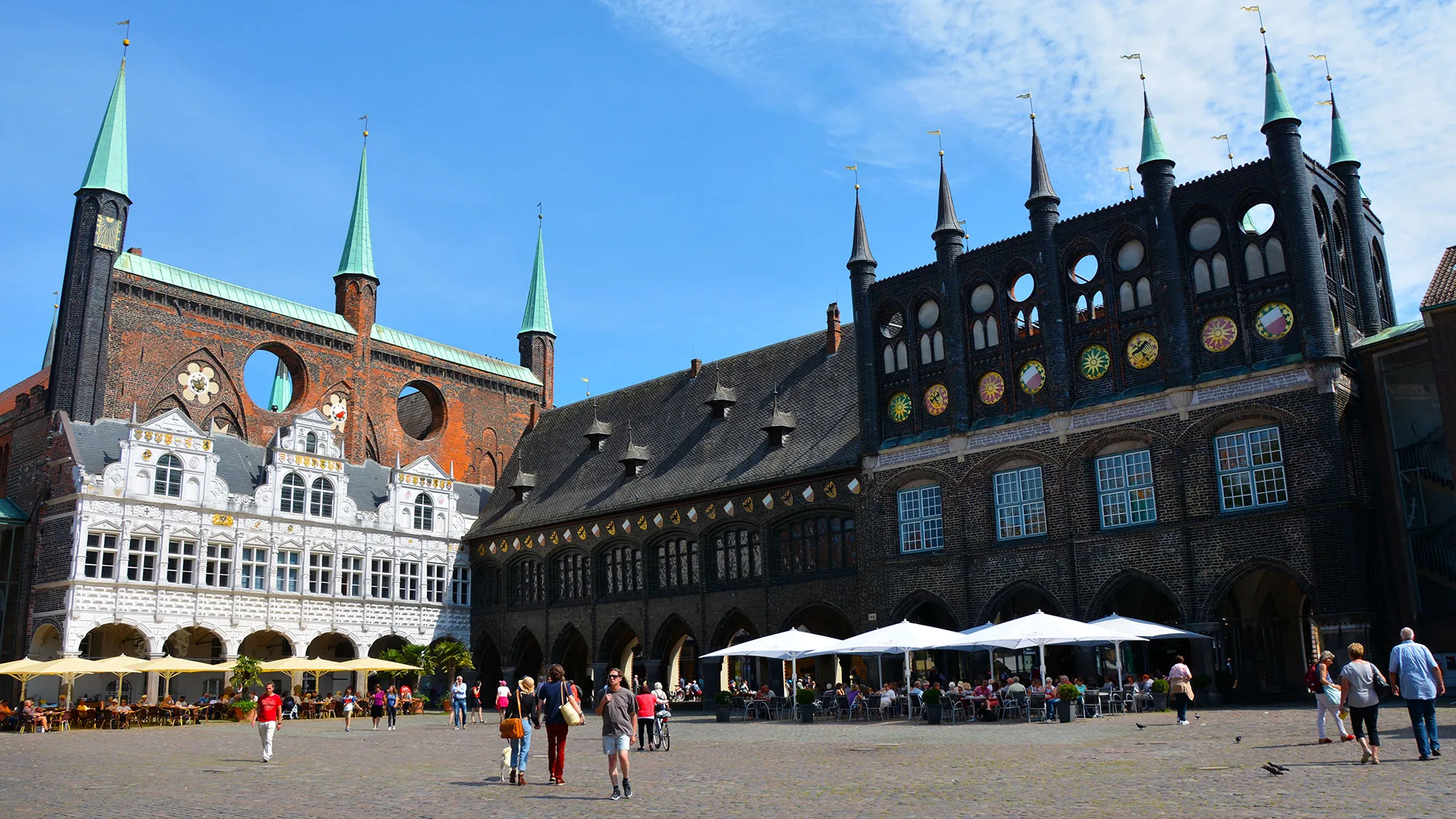
Markt is the central square in Lübeck
Read More From WorldThroughMyCamera.com